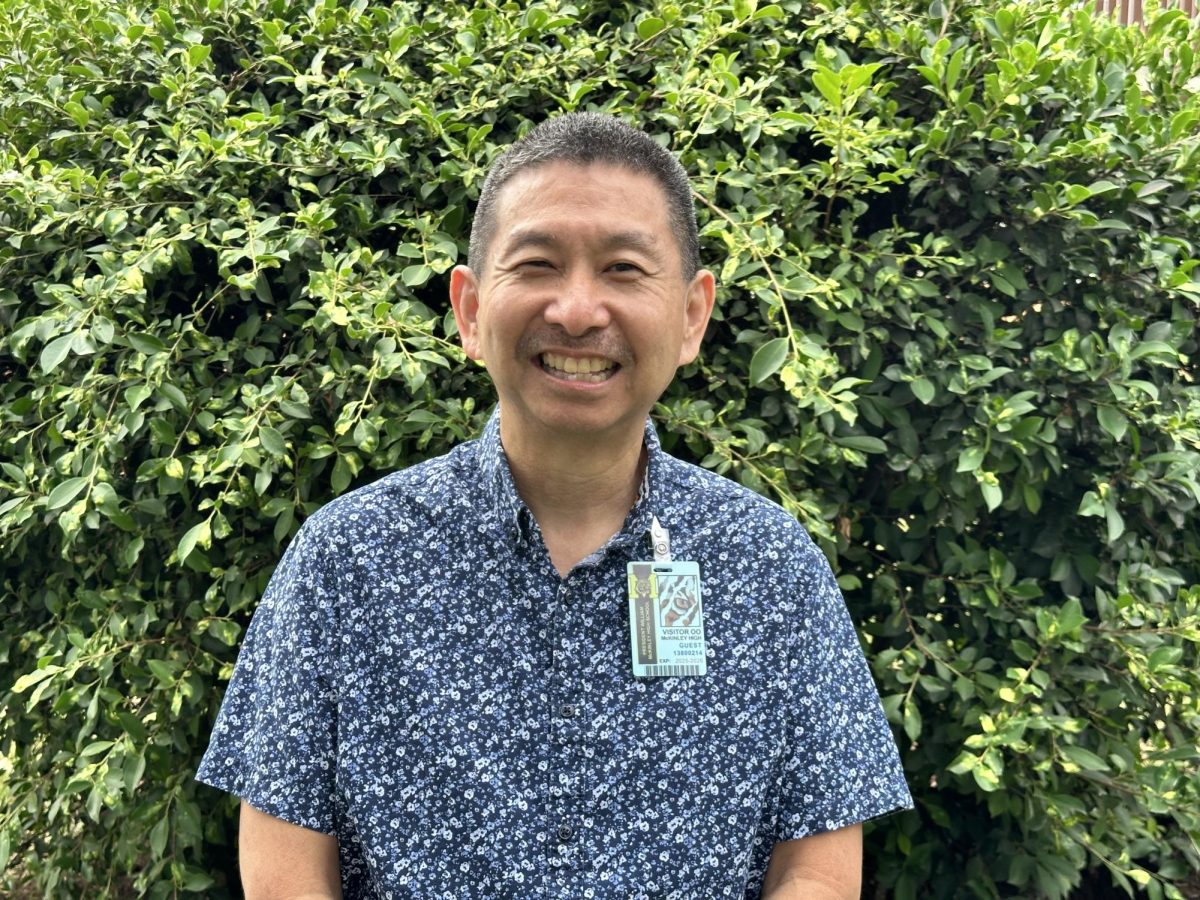
Roger Higa was first inspired to start writing music by two events that occurred on the same week during April of last year: his mother-in-law who he had cared for for 12 years was on her deathbed, and his daughter was celebrating her sweet 16.
“I was compelled to write a song for each of them, just to honor them,” Higa said. “And that’s pretty much how my journey started.”
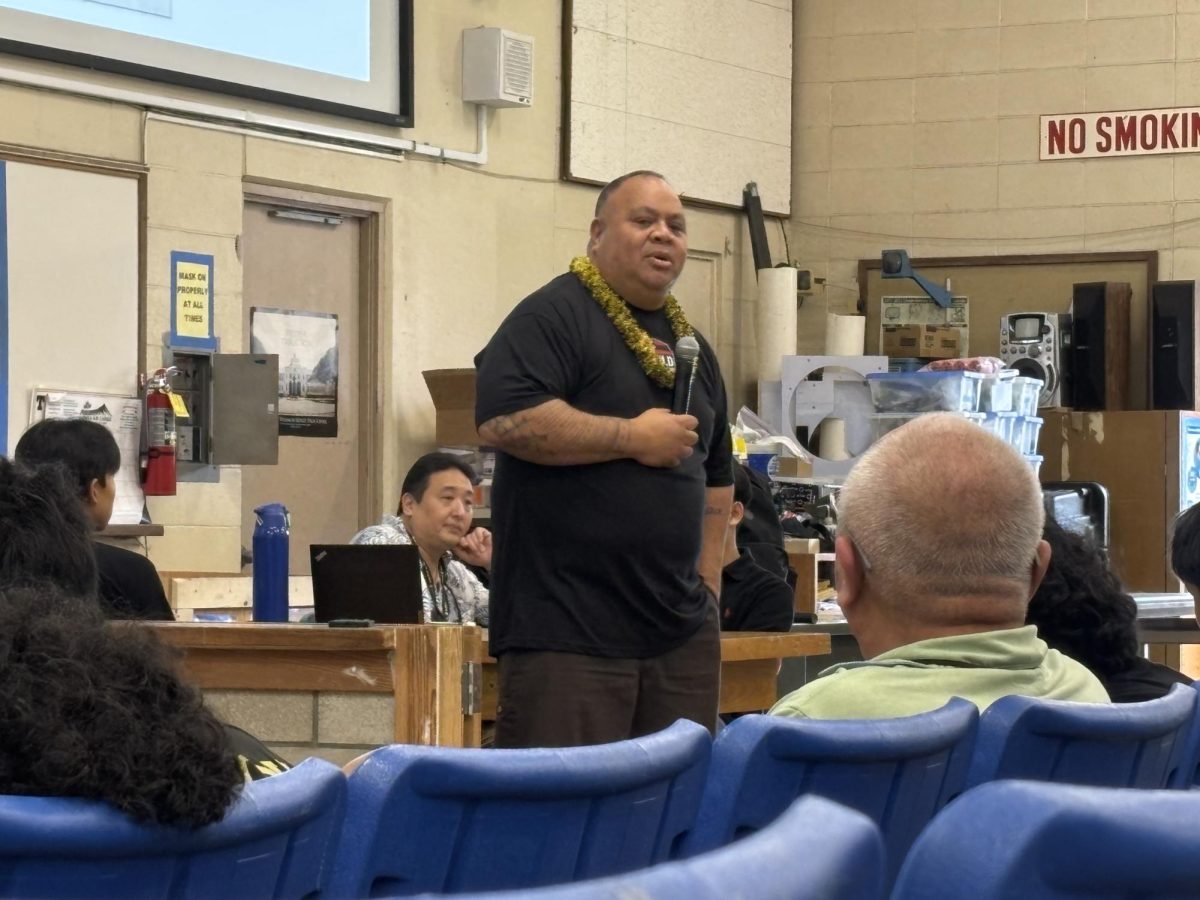
Higa is a McKinley High School alumnus who graduated in 1982. Recently, Higa worked with Tiger Media Learning Center’s Digital Design class to create cover art for his song “Aloha Honu.” The vocalist that will perform the song is Jordan Seguin (c/o ’21), another McKinley alumnus. Seguin currently works with the McKinley orchestra as a volunteer. He also serves in the Army Reserves, and so the song will be recorded after he returns from military service this summer. The selected cover art, which was created by Devan Coloma (c/o ’26), will be used to promote the song when it is released.
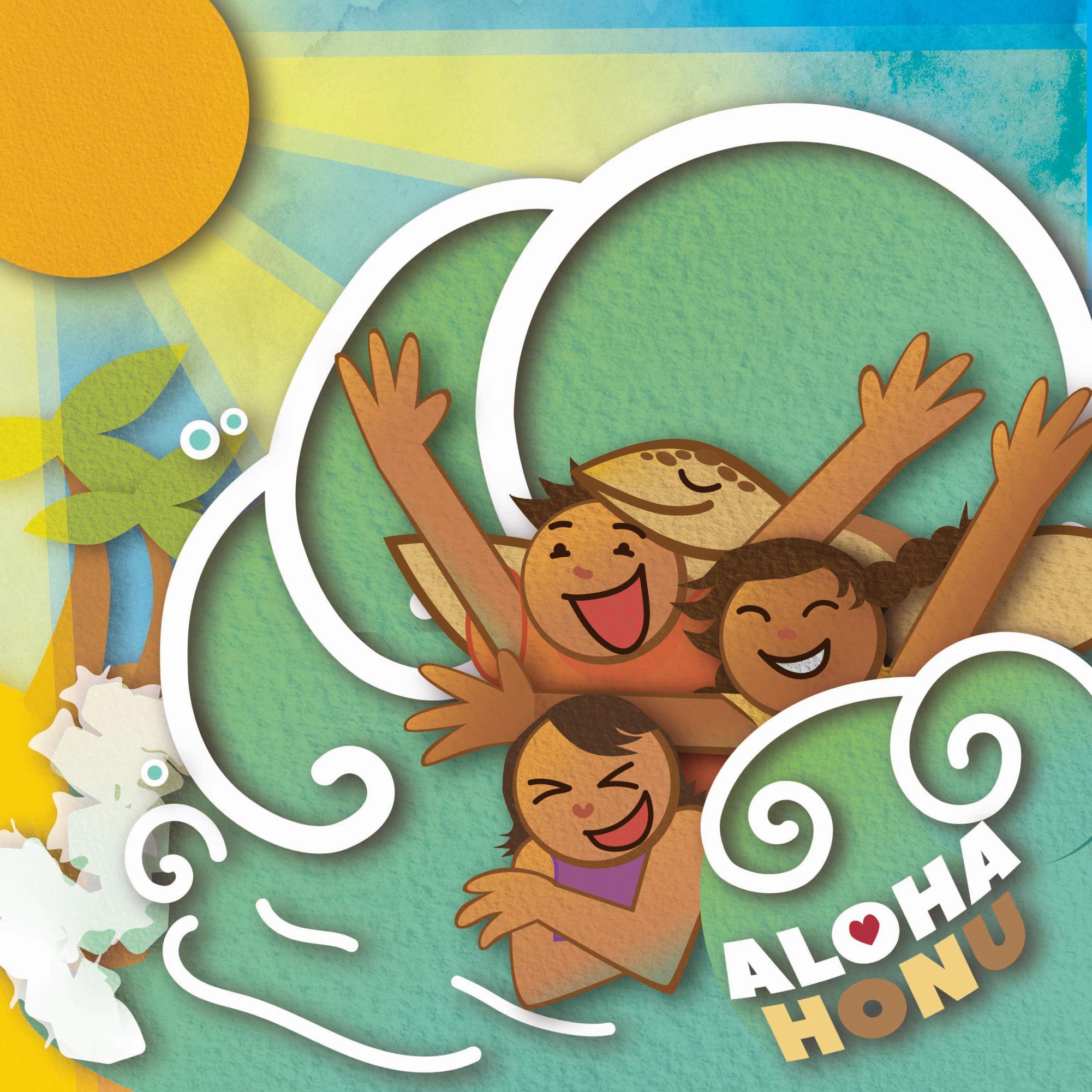
Higa said the song was inspired by the children’s song “Baby Shark,” which was released in 2016 and currently has over 16 and a half billion views on YouTube, not including its many spin-off videos which have hundreds of millions of views. Higa was waiting at a tram station in Las Vegas when he wondered about the song’s popularity. He said after he looked into why it got so popular, he wanted to write a localized version of “Baby Shark” for Hawai’i that would remind keiki that they only have one home and encourage them to do their part to take care of the land and oceans.
“We may have our differences, but I think we have a common goal: to care for our environment,” Higa said. “And if we care for our environment, our environment is going to care for us.”
Higa graduated from McKinley in 1982. He described his high school self as a highly introverted teen. Higa said he was an average student with a 2.7 GPA and often thought lowly of himself. He said he decided to collaborate with McKinley for “Aloha Honu” in order to help students realize they are capable of doing great things and give them real-world experience from working on the project that may help start their careers beyond high school and college.
“It was a way for me to give back to students who are going through the same journey that I went through back in the days when I really didn’t know what to do with my life,” Higa said.
Higa said although his earliest songs were not great, their value was in the effort he put into creating their lyrics and melody. However, it was starting to connect with other people in the community that led him to continue his journey in music to this day. Over 50 songs later, 40 of which Higa has copyrighted, he said his songwriting skills have significantly improved, and so last October Higa decided to start his business Aloha Legacy Music to give youth hope and inspiration to be or do anything they want to do in life.
“Through my music, I create things to inspire people,” he said. “So all my music, all my lyrics [are] uplifting. They’re all full of hope. They’re all full of inspiration. It’s all positive.”
Higa said he has shared his music with multiple people in the community and so far has received nothing but encouragement. His favorite part of songwriting, he said, was not knowing how the final product would turn out in the end.
“It’s kind of like opening a present, but you don’t know what’s in the box. That’s what gets me excited,” Higa said.
He said one of his favorite songs he has worked on was one that he did for a client whose son cut contact with him over six years ago and did not return any calls, emails or texts. Higa said he wrote this song to help his client get closure and perhaps one day reconnect with his son.
“So I wrote this song, and I shared it with him, and he cried,” Higa said.
Higa said he hopes others who are having a hard time connecting with their family due to differences and communication struggles may also feel inspired by the song. Currently, Higa and his client plan to find a vocalist for the song and put together a music video.
He said he wants students who are going through a similar high school experience to his to know that there is light at the end of the tunnel, and that there are people who care about them and their future. He said he encourages students who are unsure of themselves or afraid to pursue their dreams out of fear of judgment to focus on themselves and what they have control over, and let everything else fall into place.
“I use the term ‘control the controllables,’ meaning don’t let [what] other people say, do or think about things … discourage you to do anything, because you have no control over what other people think,” Higa said.
This article has gone through the following process: pitch, interviews, drafting, peer feedback focused on content/structure, revision, peer feedback focused on language/conventions/style, self-checked for ethics and fact-checked by sources. Student editors approve the article for publication.