The Hawai’i State Board of Education has a new statewide policy prohibiting student cell phone use in public schools to “eliminate distractions in classrooms, enhance academic focus and improve social interaction.” This policy was passed on Feb. 12 and is scheduled to take effect in the 2026-27 school year.
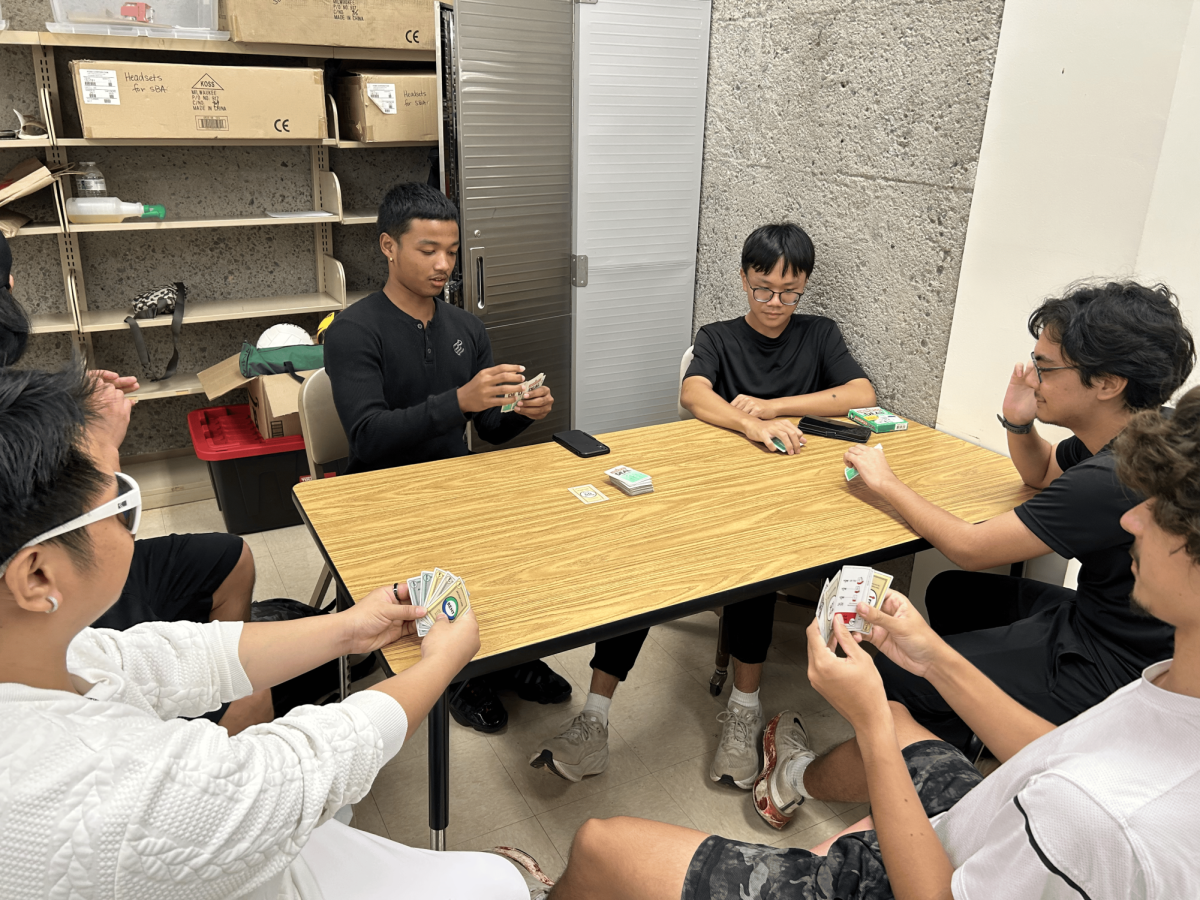
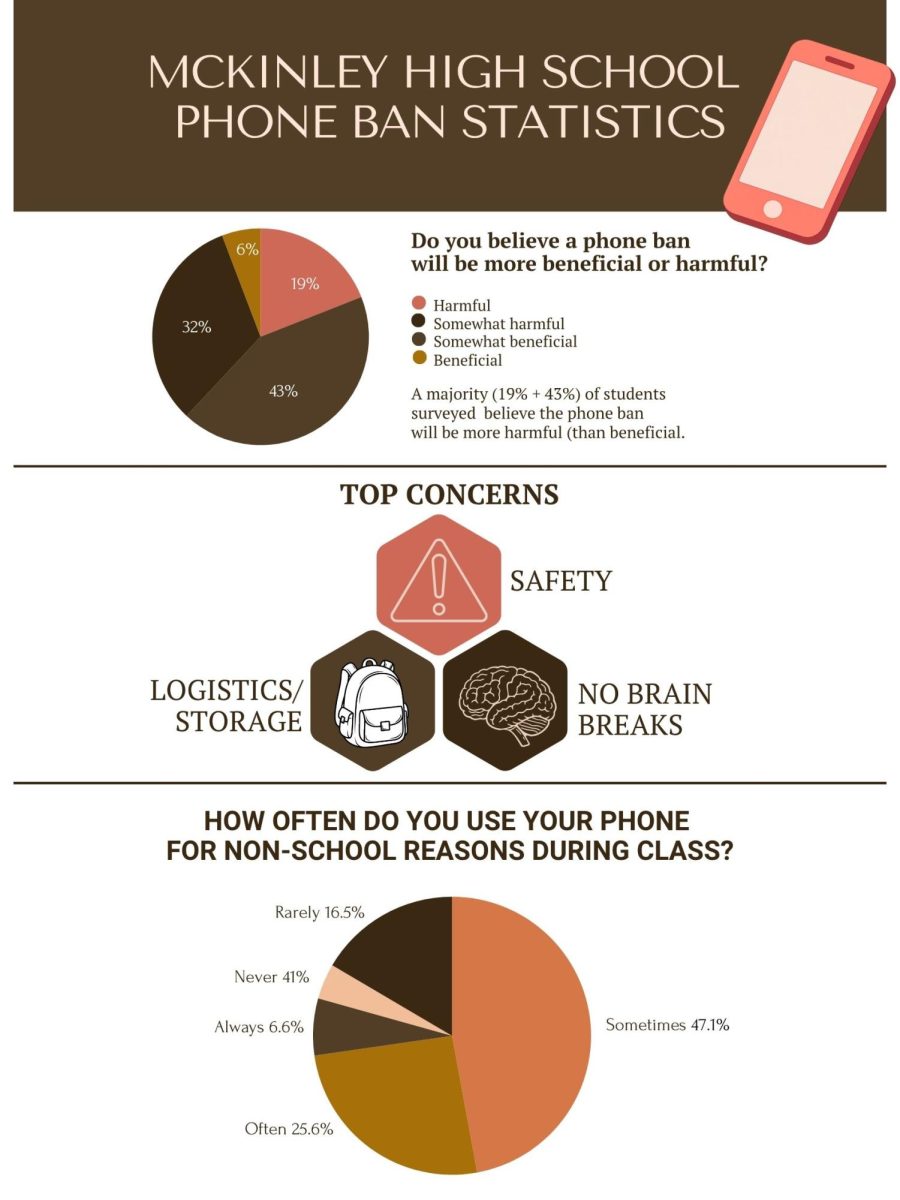
In response to the statewide phone ban in Hawai’i public schools, McKinley High School students answered a Pinion poll regarding the policy, with a large majority of students saying they knew about the phone ban being implemented next year. In addition to this, many students responded opposing the policy.
Students responded on a scale of one to four—one being phones do not harm students during instructional time at all, and four being they do. The majority answered with a two.
Along with this, the majority of students said this phone ban will be more harmful to students.
Their biggest concern with the policy is regarding emergencies, and how they will be able to contact their parents if one occurs.
“A phone ban will make it harder to contact family members in case of emergencies. Students will all have a harder time relieving stress if access to phones becomes limited,” said an anonymous student on the poll.
Students replied to the poll saying it is the teacher’s fault for not making lessons engaging.
“It is not a phone issue but a personal issue … along with the teacher being boring,” said another student replying to the poll.
What Is the Policy?
This policy states cell phone use is prohibited during all school hours in elementary and middle school. For high schools, it is only prohibited during instructional time. However, high schools may have the discretion for students to use their phones outside of that time—before or after school, lunch and at designated breaks.
The Board of Education has been discussing this policy since early 2025. According to the official policy, the board recognized cell phones have been “used to engage students in innovative learning, but that informal learning has concerns.” Some of these concerns include cyber-bullying, distraction from work and interpersonal communication.
Another concern was the inconsistent regulations on a school level—meaning not all schools have the same policies. The board wanted a unified policy, reflecting “student development readiness to establish clear expectations.”
The board collected data regarding complex area perceptions of the policy. According to their data, 86% of schools have a policy for cell phone use, while 14% stated they do not. The most common phone policy is having them turned off and kept in backpacks.
The board has conducted many public hearings for the community to testify. Logan Otani, Center for Tomorrow’s Leaders Vanguard member and University of Hawai’i at Manoa student, testified in support of the policy.
Otani and her team were there for the passing of the BOE policy, and are now in partnership with the Board of Education to create a consistent implementation plan for all schools.
Along with this, they have been researching what other schools nationwide have been implementing for phone bans.
Student Thoughts – Comparing to the Mainland
Poli’ahu Cootey-Garcia (c/o ‘28) moved to Hawai’i this year from Oregon. She said her school had a stricter phone ban policy compared to the one being implemented in Hawai’i.
Cootey-Garcia said in Oregon and other mainland schools, they have an “off and away” policy from bell to bell, even during lunch and passing periods. The only exceptions were for documented medical reasons.
“I felt really restricted,” Cootey-Garcia said. “You had to go all the way to the office to get your phone.” Even with the travel to the office, Cootey-Garcia said the chances of them letting students use their phones are very low, even in emergencies.
Compared to the Oregon policy, Cootey-Garcia said she likes Hawaii’s more.
“I understand not having them in class, because I think phones can distract you a lot,” she said.
However, she said she thinks a lot of students will rebel due to this policy, even though it is nothing compared to the ones implemented in other states.
“I think they would go even more crazy if it was the one in the mainland … I don’t think they understand how lucky they are,” she said.
Cootey-Garcia emphasized the importance of mutual respect between administrators and students.
“They cannot make students feel like they are less than what they are by taking their stuff away,” Cootey-Garcia said. “Administrators should make sure that teachers are also being nice to students so there isn’t a big rebellion.”
What Does Administration Say?
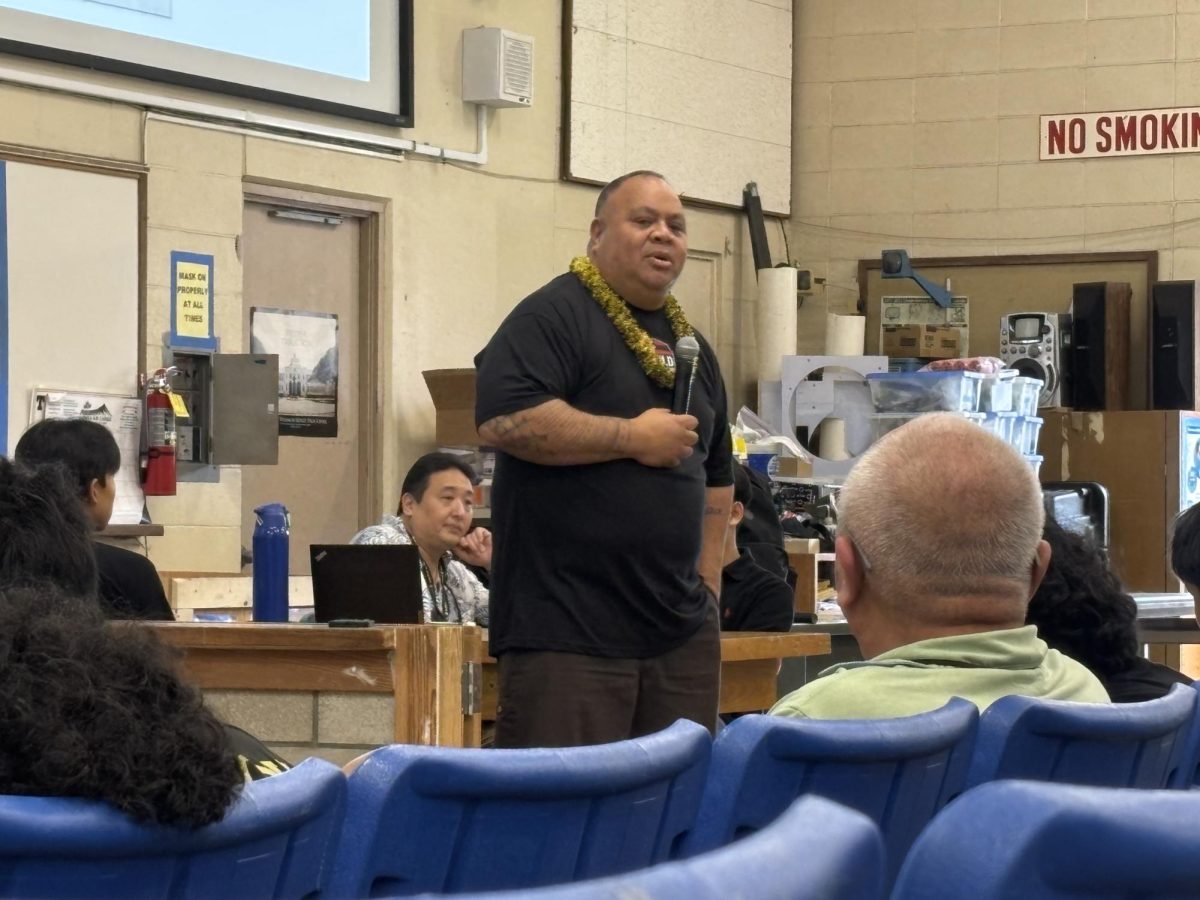
In a Pinion article written two years ago regarding phone use in school, Principal Ron Okamura was interviewed and said the administration team thinks every day about putting a mandate on phones.
In that interview, Okamura said, “We would like to see some kind [of policy] across the DOE, some consistent rules or policies.”
At that time, Okamura said he saw dangers of phone usage regarding cyberbullying and fighting. “We think about [phone mandates] every day because there’s not a day where someone doesn’t come up and says ‘Look! Someone is bullying me,” Okamura said.
In response to the new phone ban policy, he said the biggest concern with the policy is implementation – getting kids on the same page with adults and ensuring parents feel safe. The students’ main concern at McKinley is safety and using their phones during emergencies.
“When I was in school, when there was a family emergency or my parents had to get in contact with me, they called the office,” Okamura said.
He also said when many students use their phones during emergencies, it puts more people at risk of danger. For instance, Okamura said phone lines can get blocked when too many people are calling at once.
“Our parents don’t understand that the safest place [during lockdowns] is within the classroom,” Okamura said. He also said he does not want to risk parents coming to campus when there is an emergency.
Besides the concern of implementation, Okamura is happy this policy is going into place. However, he is still waiting for the solidified policy for a consistent basis around schools.
Currently, Okamura said they are looking at phone lockers and focusing on a way for the policy to also be consistent within McKinley. He said a system where the students only put their phones in their bag is not the best as the temptation to use it will still be there.
Okamura’s plan for the phone ban next year for students who refuse to put their phones away is a three warning system—telling them to put their phones away, the teacher holding onto it and then getting sent to the office.
“Rules are made because something happened that wasn’t good, or to prevent something that could be,” Okamura said. “If you choose to do something wrong, you’ve got to be willing to accept the consequences.”