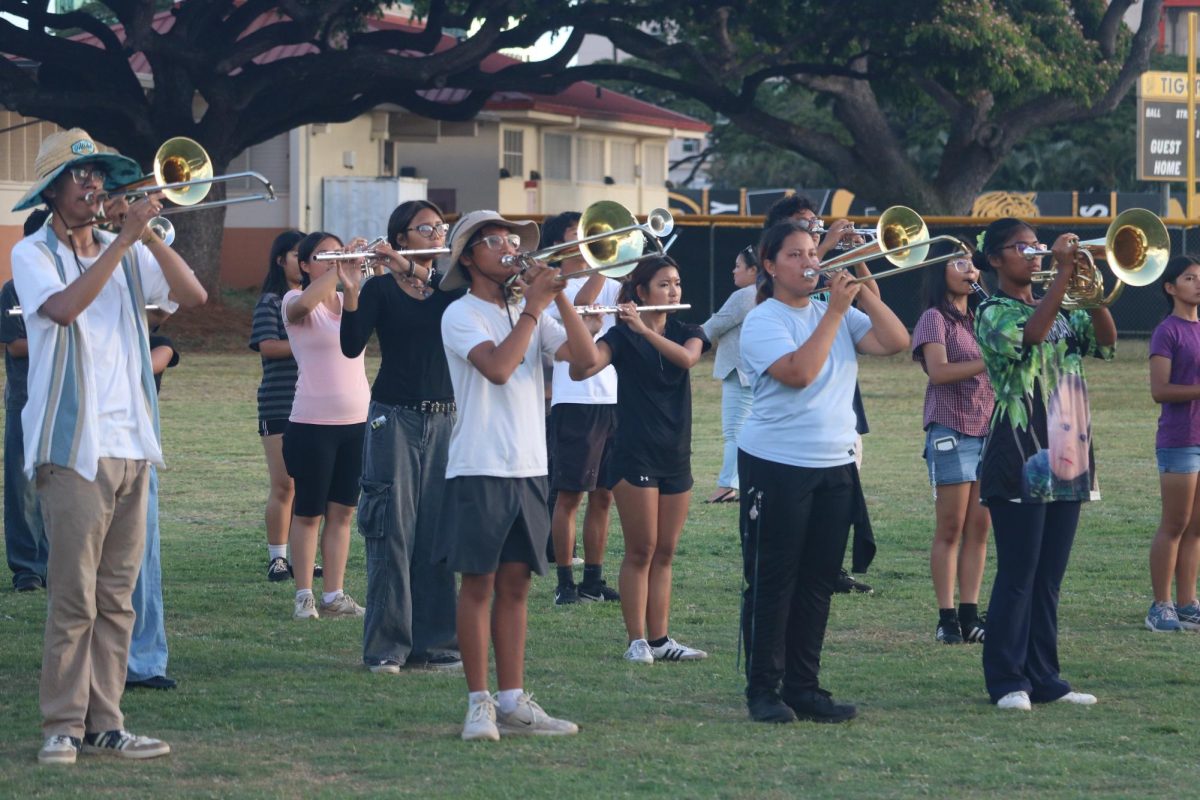
Starting from late-July, while other students might have been sleeping in or at the beach trying to escape the summer heat, the McKinley High School Marching Band has been practicing at the baseball and football field for their second year of competition–their most difficult performance yet.
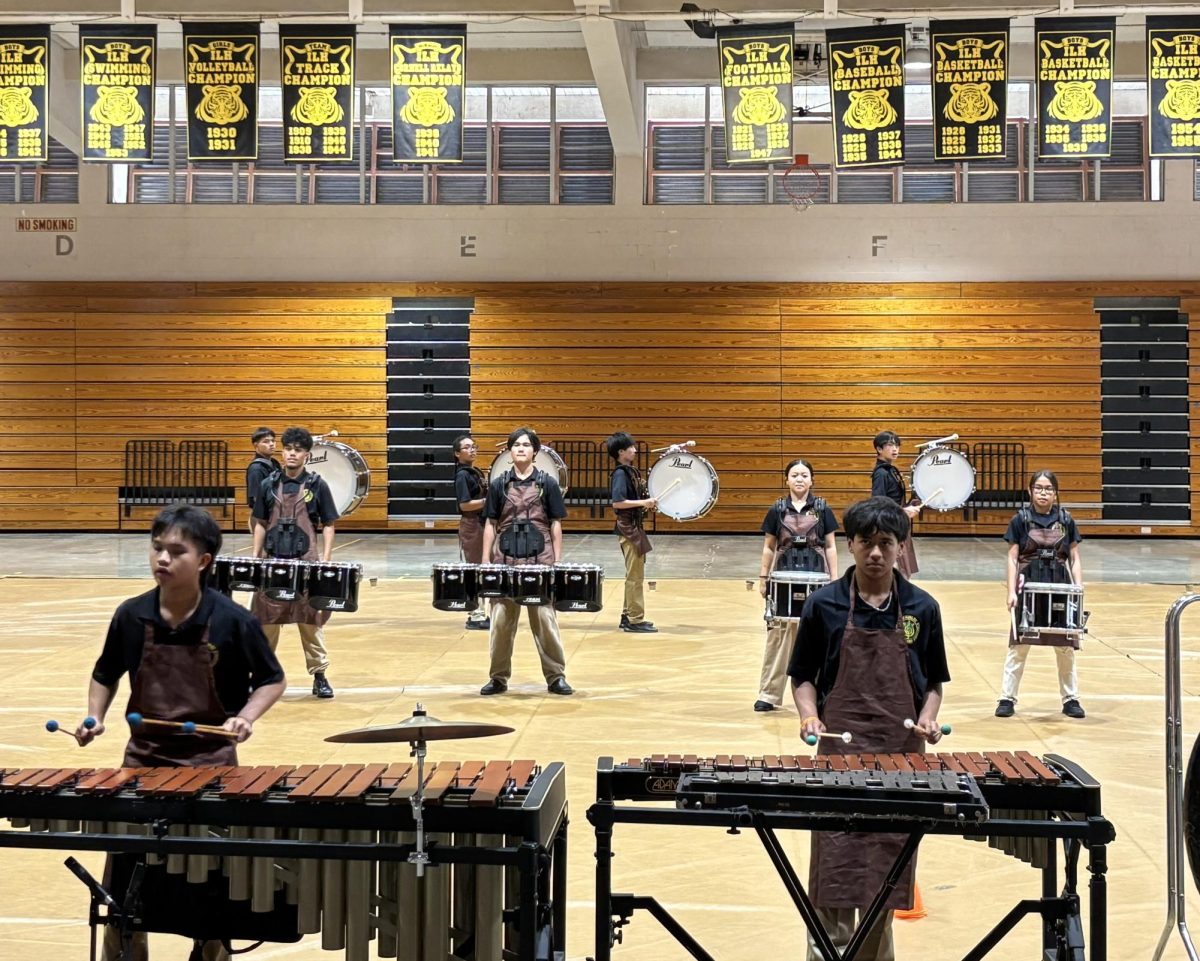
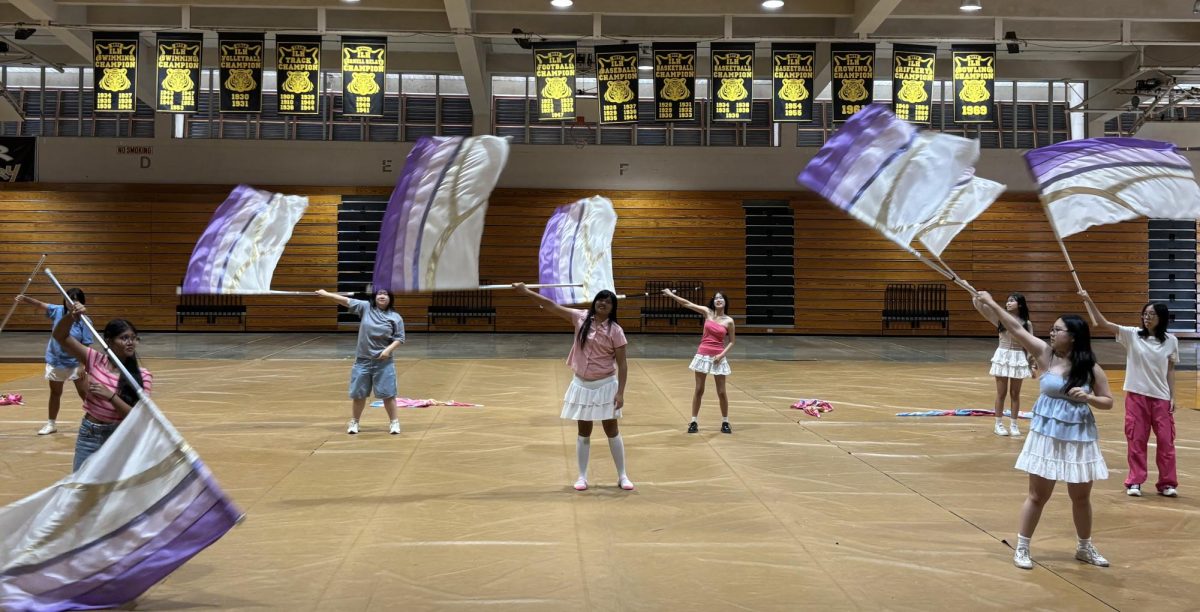
Marching band is an optional activity that students in the Band and Orchestra programs can participate in. There are three primary groups involved in the performance: the winds, color guard and percussion. Each section takes on different roles, and some even take on multiple. The winds, simply called that because they play instruments that require them to blow and use air, focus on playing and marching at the same time. The color guard focuses solely on choreography—they dance, spin flags and ultimately add pops of color and dynamism to the performance. The percussion section consists of the battery, or drum line and front ensemble, which play the stationary instruments and thus do not move. Audience members watch from the bleachers, where they are able to see the designs form from the top.
“It takes a lot of coordination and body control to make sure that the music is very steady, on top of being able to move and get to these different places to make these nice, uniform shapes,” Band director Joseph Nakamoto said.
This year, the Marching Band will be performing at the Roosevelt homecoming game, the Menehune classic on Oct. 18th, the Kapolei invitational on Oct. 25th, the Kamehameha tournament of bands on Nov. 1st, the Rainbow invitational at UH Manoa on Nov. 11th and the Mililani band fest on Nov. 15th. High school marching band programs across the state are split into three divisions: Single A, Double A and Triple A. Schools are categorized into these divisions based on the number of members in their program. A smaller school like Castle is in the Single A division, while a medium sized school like McKinley is in the Double A division. Schools compete against other schools within their division—competitors in McKinley’s division are Roosevelt, Kapolei, Radford and Kailua High School.
The theme for this year’s show is Matador, also known as bullfighting. There are four parts to the show, which is 7 minutes and 30 seconds long. Practices are held on Tuesdays and Thursdays from 4-6:30 PM and on Sundays from 2-6:30 PM. On Sundays, the Marching Band gets to take advantage of the entire football field, simulating how a real competition would play out. Although the band focuses on different aspects of the show such as music and marching on different days, sections are often first split up and led by their section leaders so they can practice in groups. Later, each section comes together to execute the entire performance.
“ … We want to learn separately, and then we come together as one to put it all together. It’s almost like a puzzle…like putting the pieces all together,” Nakamoto said.
What sets this year apart from prior years is that participation is optional and before last year, the Marching Band did not compete. Nakamoto said they decided to start competing last year because they felt like they were ready and they wanted to test the waters.
He also said he believes this shift from being mandatory and done for a grade to being optional has strengthened their performance, because it means willing participants are passionate and committed to the program. Compared to last year, the performance is longer, the music is harder, and the drill—which is when marchers make designs through their movements—is more difficult. Last year’s show was a grade 1.5 and this year’s is a three or four.
Despite the rigor involved, members of the Marching Band seem to regard the program as an enjoyable and rewarding experience. Marchers recall fondly on memories they have made in the program, a notable one being band camp—which was held during the first week of marching band in late-July. Students participated in numerous activities, including a spirit week that had themes such as minion day, match with your sections day and white lie day. These activities are supposed to promote bonding between members, which can be especially important for establishing a sense of belonging and connection for the underclassmen, as well as strengthening the relationships between members in general.
“I think it gives a good sense of community, especially in the beginning of the school year. You really get to know the people around you,” Cunningham said. “You’re with them a lot for a good portion of the day. You get to know their personalities, and you just get closer together.”
Marching band is also an opportunity for students to learn important life skills such as leadership and organization. Even members without formal leadership roles, particularly the upperclassmen, are expected to step up and take charge.
“If someone’s not telling you to do something, but you know something needs to be done, you usually tell them and take the first step … I’m an upperclassman in my section—I’m not section leader, but I still try to enforce all the expectations,” Charwin Irebaria (℅ ‘27) said.
McKinley has a legacy of having an outstanding music program. One of the models for this year’s Band and Orchestra program is: “Through Pride and Discipline, we uphold our legacy.” Nakamoto said one of the biggest challenges they face is simply that the marchers and Nakamoto get tired. But through perseverance and determination, they do the best they can.
“People see us band kids and are like, ‘man, they’re such geeks,’ and, ‘why do they do these things?’ But at the end of the day, we’re almost like a sport. We train, we practice, and we have to do the best we can,” Nakamoto said.