“Defining Courage” is a show highlighting the contributions of Nisei soldiers during World War II—a story that has seldom been told. “Nisei” is a term used to describe second-generation Japanese Americans whose parents immigrated to the United States but were born in America themselves. After the attack on Pearl Harbor, these Americans faced widespread prejudice and suspicion, resulting in approximately 120,000 Japanese Americans being forcibly sent to internment camps, where they were subject to overcrowded, unsanitary and alienating conditions. These same Americans felt obligated to prove their loyalty to America, creating some of the fiercest military units in U.S. history.
The show was produced by the nonprofit organization “Story Boldly,” led by David Ono, a Japanese American storyteller and news anchor for ABC News in Los Angeles. Ono decided to tell this story because of his initial ignorance of the subject; despite growing up on military bases, having a father in the Army and being Japanese American himself, the first time he heard about the Nisei soldiers was when he moved to California.
“People were asking me if my parents were in the camps, if my dad was in the 442 … I had known nothing about this chapter in history,” Ono said.
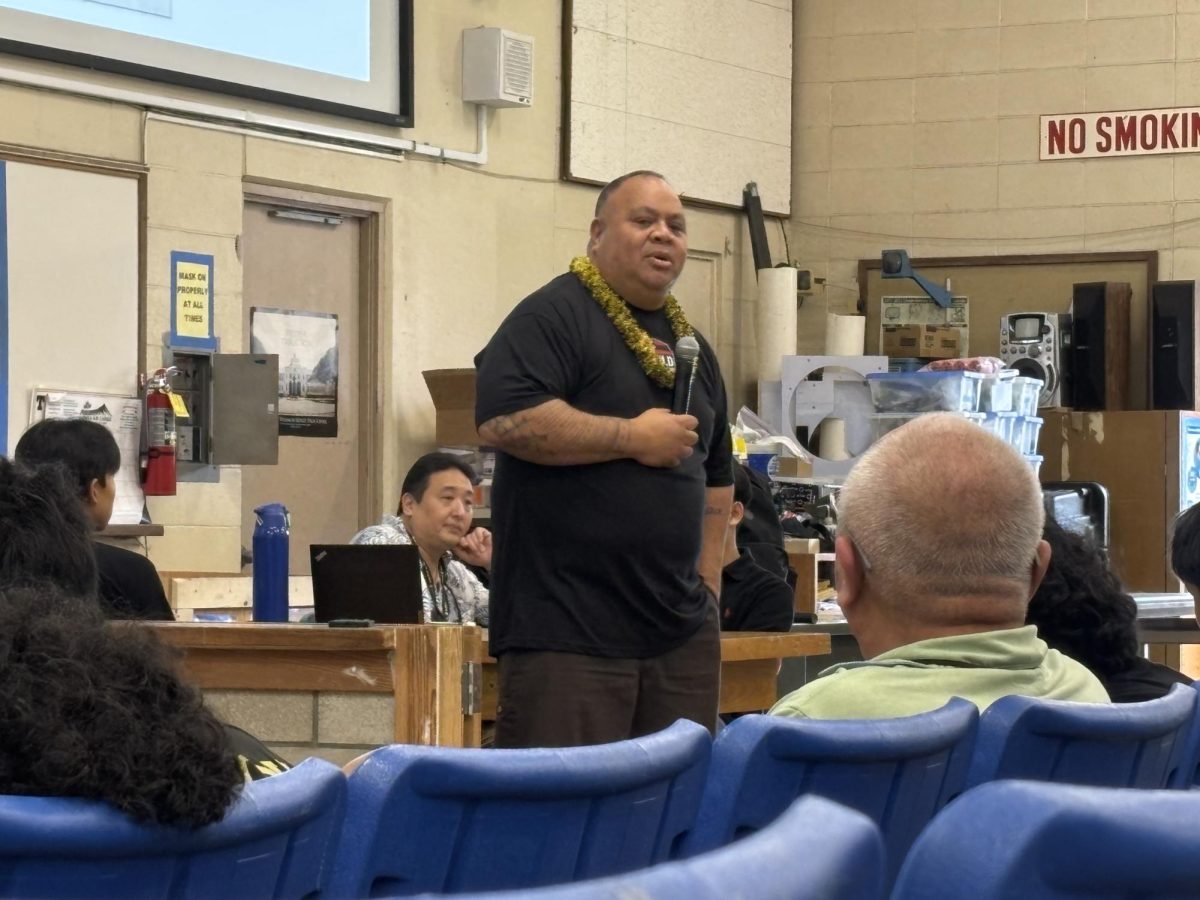
The show takes the audience to various countries, including Italy, France, Germany, Japan and the United States. With footage shown on a large screen, live narration from Ono and a dynamic musical performance featuring an orchestra and singers, “Defining Courage” is dubbed as an “immersive experience.” Using diary entries, interviews with soldiers’ relatives and firsthand accounts, the show primarily unfolds through the stories of individual soldiers. Many were 15 to 18 years old and still in high school; some attended McKinley and neighboring schools.
“It’s important to build stories through people,” Ono said. “By telling stories about people … you learn about the bigger story.”
Typically, tickets range from $20 to $90 depending on the location, but on Nov. 7 during third period, McKinley teachers had the opportunity to bring their classes to the auditorium to watch the show for free. Students from Farrington High School’s JROTC program attended as well. So far, “Defining Courage” has been taken to California, Hawaii, Washington, D.C., Texas and Arkansas, with plans to continue touring throughout the United States.
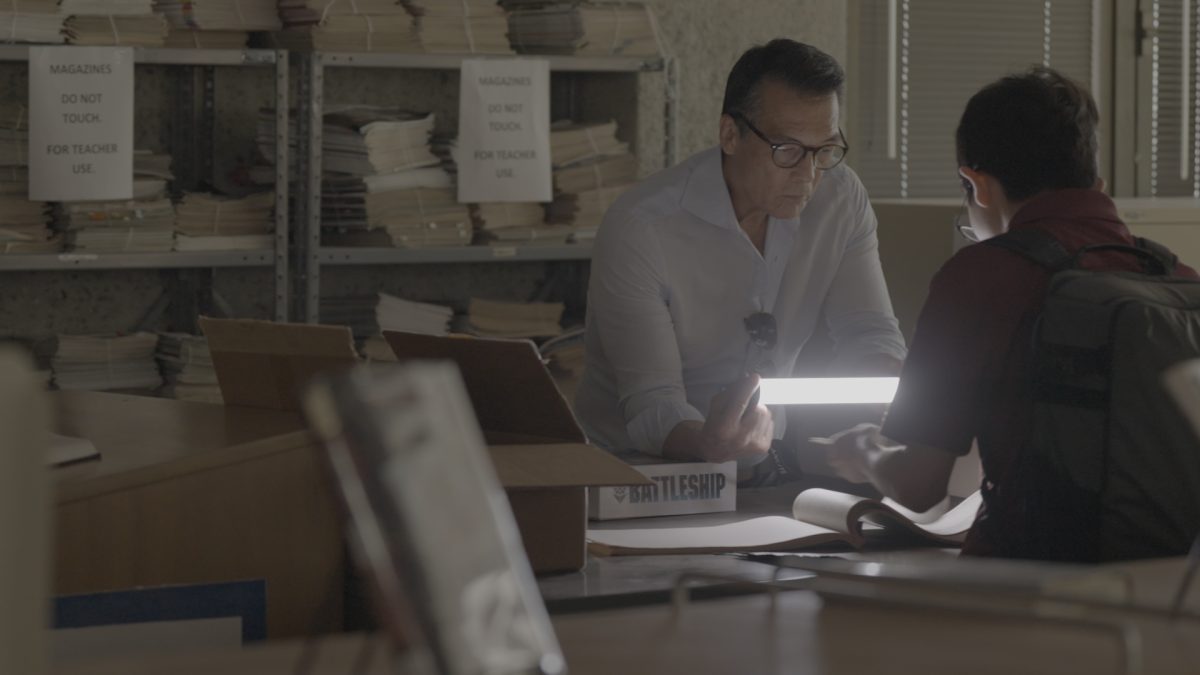
Wherever it is taken, the “Defining Courage” team modifies the show to better emphasize the unique historical connection the location has to the subject. In Hawaii’s case, footage of McKinley and neighboring schools was shown, and stories of students who attended these schools were highlighted. It also included an interview between Ono and Daniel K. Inouye’s son, which was conducted in the A-Building hallway in front of the auditorium.
Daniel K. Inouye, a McKinley alumnus, witnessed the Pearl Harbor attack at just 17, when he was a senior at McKinley. This inspired him to volunteer to join the 442nd Infantry Regiment at 18. The regiment was a segregated, all-Nisei unit and is the most decorated unit in U.S. military history. During a battle against the Gothic Line in Italy, Inouye was fatally wounded, resulting in his right arm needing to be amputated. For his bravery and various contributions, he received several prestigious awards, such as the Medal of Honor and the Purple Heart, just to name a few. He went on to become the first U.S. representative of Hawaii, and later a U.S. senator, making him the first Japanese American to serve in both chambers of Congress. In 2010, due to his seniority, Inouye became President pro tempore, making him third in line to the presidency and increasing Hawaii’s political influence. Today, the McKinley library is named after him as a way to honor his contributions, and he is also a Hall of Honor inductee.
McKinley High School had a deep involvement in the WWII war efforts. A significant portion of the student body were nisei themselves—the school was even nicknamed “Tokyo High” due to this. Bullet holes are visible on the walls of A-Building, and a plaque outside the auditorium commemorates the Nisei soldiers who were killed in the war. Students built trenches on the oval and front lawn in preparation for attacks. They also raised over $333,000 in war bonds to purchase a Liberator bomber, “Madame Pele,” to assist with war efforts.
Alyxzander Castillo (℅ ‘28), a student in the JROTC program, first heard about the show in his freshman year. While researching events the McKinley Color Guard participated in, he learned about the “Defining Courage” show that was held at the Hawaii Theatre in 2023, where the Color Guard performed. When he learned that “Defining Courage” was coming to McKinley, Castillo said he felt excited because it tells an important part of history. He said his favorite aspect was how it told stories through people, which created a more personal connection among the audience—especially because the subjects in the show were 14 to 18 years old, the same age as the students in the audience.
“… you die two times; [once] physically, and then when someone says your name last,” said Castillo. “I believe that is how we can keep the story alive …”
Melissa Nishihara (℅ ‘28) is another student who attended the show. When she first watched it with her Period 3 class in the auditorium, she did not know what the term “nisei” meant. However, during her second watch with her mom on Saturday, she learned the meaning of the term, which helped her understand the show better. She also learned that her mom is a nisei, making Nishihara a sansei (third generation). Nishihara’s grandparents were born during WWII; her grandma moved from Japan to Hawaii shortly before the war and experienced being sent to an internment camp. Nishihara said one takeaway she had was a deeper appreciation for her family.
“Especially my grandma, because she’s still alive, still well, and still happy all the time. I don’t understand how she does it. It makes me more appreciative of what she does for me and my family,” said Nishihara.