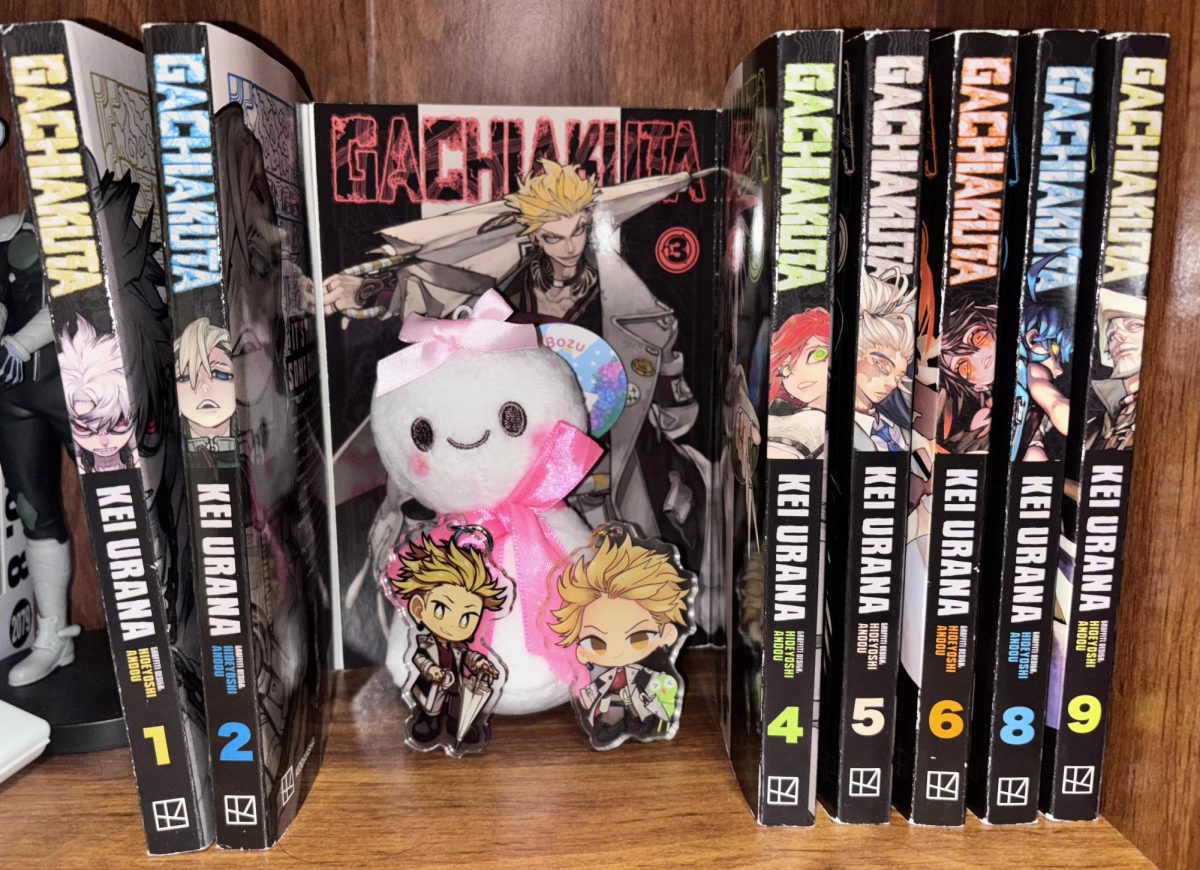
*Editor’s Note: I have only read volumes 1-9 of the manga, and I am mainly going off season one of the anime adaption of it which I have watched the entirety of
“Gachiakuta” is a fairly new manga, being Kei Urana’s first ever published manga with her assistant Hideyoshi Andou, a graffiti artist. I was recommended the anime and manga by a friend, and never got around to watching it untill late February. When I finally did watch it and interacted with the community, all I could think was, “This anime is absolute trash.” Down to the art, the storytelling and overall idea of it.
The story centers around Rudo, an orphaned teen who lives somewhere called The Sphere, a floating island. He was falsely of murdering his adoptive dad, and was punished by being dropped down into The Pit where they also throw all their trash into. Despite this, he manges to survives and teams with people who lives in the pit, The Ground, plotting his way to get back up and get revenge.
Right off the bat, without knowing anything about the story, we are met with beautiful scenes showing the class divide between the rich and poor. When we get down to The Ground we see more of that environmental story telling. Trash everywhere, buildings that look like they have seen better days, and the characters’ clothing matching their environment.
When it comes to character designs in the anime and manga, simplicity makes it easier on the mangakas (people who create manga) or animators to represent it throughout the series. Yet in modern series, character designs are more unique and complex.
Besides the art, the topics that Urana explores in “Gachiakuta” heavily reflects the real world. Some of the topics include the consequences of systemic inequality, mental health issues and pollution. The Ground which Rudo has fallen into is built on population. The rich and wealthy throw their trash down onto the poor. The people on The Sphere does not even know there are people down there, but they could care less. They already have a wall dividing themselves from the slums, so why should they care about the people down below? That trash in turn becomes beasts that attack the people of The Ground.
The people on The Ground thrive despite this. They learn to adapt and find value in trash. Those who cherish objects deeply, pour all their emotions and willpower into it, that object will become something more and become a Vital Instrument. That person becomes a Giver, someone who has formed a deep and personal bond with that instrument. Their Vital Instrument allows them to fight the trash beasts and help others.
While the people on The Sphere discard items the moment they break or lose it value, the people on The Ground value those items no matter what. The idea of loving something so much no matter what it has gone through, even if there was a better version of it, even if to others it may be considered trash. Choosing to cherish an item even when a person could get a new and better one is something that Rudo, the main protagonist, values. He is able to see the value in what others deem as trash. What others throw away, Rudo takes to fix or give purpose to it for one last time.
What others deem as trash, Rudo sees them as treasures.
The way Urana explores mental health with her characters really caught my attention as well. Many characters, especially the main cast, experiences some kind of mental health issues. Some experience self-harm thoughts, suicidal ideation and self worth issues. Urana does not make jokes about them and shows how it really affect the characters. Especially with how Rudo deals with his grief.
The way it is portrayed is quite realistic too, coming from someone who struggled with their mental health and knows others who have also faced struggles. Viewers can see this portrayal especially with a character met later in the series named Amo. Without going too deep, it is heavily implied that she was sexually assaulted and groomed from a very young age. The topic itself is treated seriously and shows how that trauma affected Amo. If you do plan to watch the anime and feel uncomfortable with the topic, avoid episode 13.
Another thing that really stuck with me most is how extremely diverse the characters are. Normally with anime the focus is set in Japan, so the characters are typically Japanese, and if they were an ethnicity other than Japanese, they are sometimes represented in an odd or weird way. Yet, in “Gachiakuta,” most of the characters aren’t Japanese. Some characters look more European, East or Southeast asian and some look like they come from South America.
As someone who prefers to watch anime in sub, “Gachiakuta” an the animes where watching in dub is the better option. The characters feel so much more alive and not to mention the accents they give to some of the characters.
There are times I have seen online trying to argue that they are all Japanese. But in a YouTube interview where the interviewer talks about the diverse characters, saying how all the characters look like they come from different countries. Urana said “We envisioned the world as a real mix when we created it, including people of different backgrounds.”
Not to mention the varying body types we see. We see characters who are more bulky, some more skinny and others more on the chubby side. There were many times in the anime I got excited because there was a character that had the same body type as me. Not to mention how some character problems or things they deal with, mirror how some people feel in real life. From the main character having chronic pain to characters facing self worth issues.
It may seem like a small thing to others, but having diversity anywhere is important. Not just because it adds flavor, but it allows people to be seen.
“Gachiakuta” might be the next big anime in the next few years as it gets greenlit for a season 2. The manga is still ongoing with many mysteries for readers to unravel, and more material to draw on for the anime. The anime itself has amazing art, music and fight scenes. Not only that but an amazing cast of characters, a good dub and a complex story that can translate to real life.
If someone were to tell me that “Gachiakuta” is trash as an insult, I will think they are complementing the anime. If they see the anime as trash, then it is a treasure to me.