




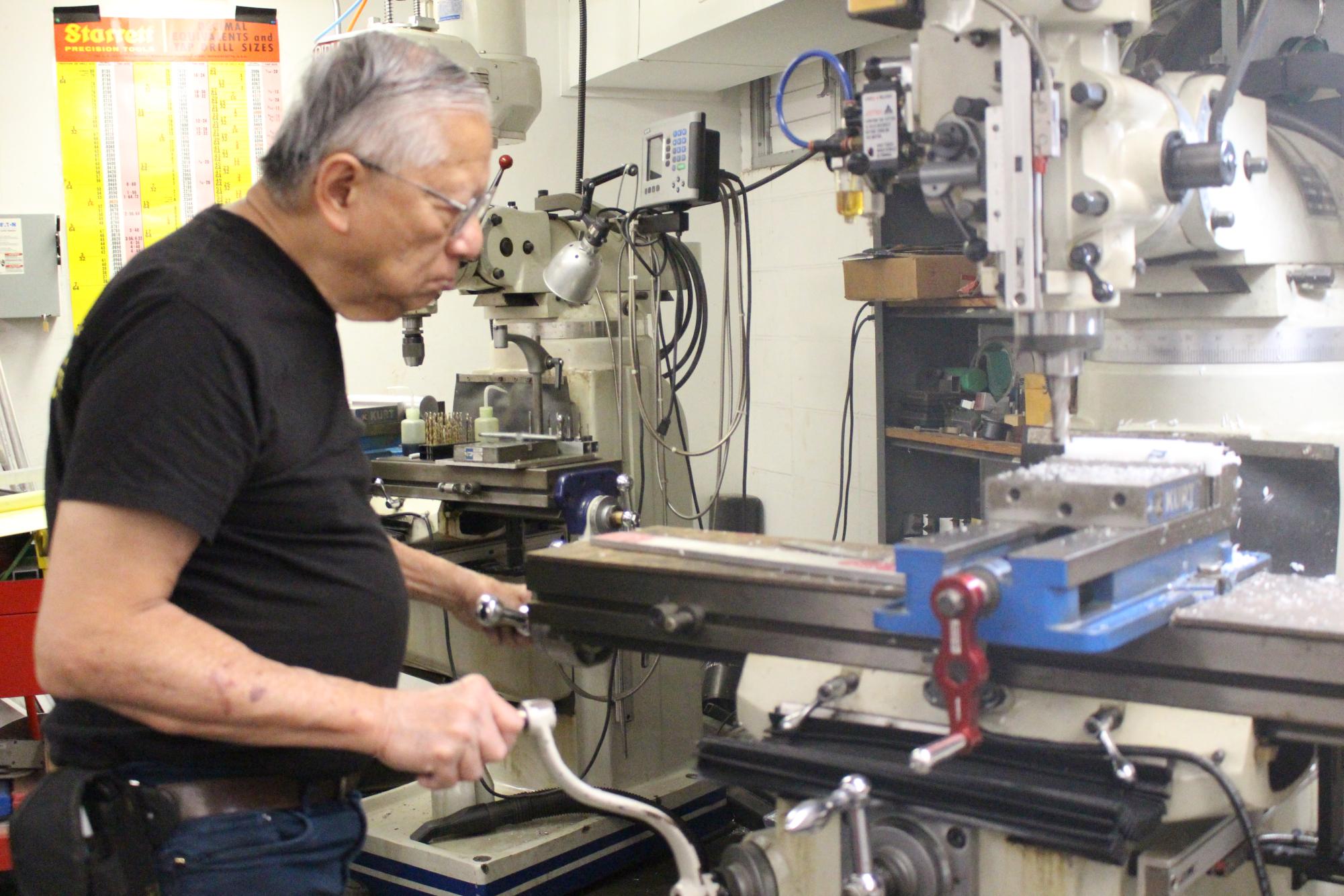
After a quarter century of rigorous competition, President William McKinley High School’s robotics team, Team Kika Mana (tiger power) #368, has decided to take a break from competing due to a shortage of mentors and conflicting schedules.
Despite the sad news, McKinley’s community can find peace in knowing the team can now have a well deserved rest and shift focus to celebrating the people who made the team what it is today. Since the team’s first competition back in April 2000, two mentors, Roy Tom and Alan Ing, have devoted their skills, knowledge and time to the team, guiding students through the many challenges and triumphs they encountered along the way.
In 1999, with the assistance of longtime McKinley High School science teacher, Art Kimura, NASA officials selected McKinley as one of two schools in Hawai’i to be sponsored by the NASA Ames Research Center to participate in the FIRST Robotics Competition. For Inspiration and Recognition of Science and Technology (FIRST) is a non-profit organization that prepares young people for careers in science, engineering and technology through robotics programs. This program was founded by Dean Kamen in 1989. Milton Lau, Team Kika Mana’s teacher adviser, was tasked with getting industrial partners and professional mentors to join their team in order to compete. So he asked Regina Ting, who worked in the Education and Consumer Affairs Branch at HECO, to send an “SOS” email asking if anyone was interested in helping with the competition. Alan Ing, who was an engineer for HECO at the time, saw the email and joined the team after seeing a presentation on what the project entailed. Lau also contacted Roy Tom, a machinist at the University of Hawai’i at Mānoa’s Department of Physics and Astronomy, with the help of then student teacher Brent Hirata, who also worked at UHM.
Despite nobody on the team ever building robots prior to that initial competition, the team, along with their alliance partners, took home the silver medal in 2000 at the FIRST Robotics Silicon Valley Regional in San Jose, California. This was far better than what Lau had expected that year, as he said all he told the team was to not come in last place.
Elaine (Owens) Manabe (c/o ’01) was the first team captain of Team Kika Mana #368. Manabe went to the Rochester Institute of Technology after high school and came back to Hawai’i to work at HECO as an electrical engineer after graduating in 2006. Manabe said she saw how having mentors like Tom and Ing are necessary in order to have a robotics team. It influenced her to serve as one of Kika Mana’s mentors herself starting in 2005, when she was still in college doing cooperative education internships, up until 2013.
“We wouldn’t have been able to build the robot without them back then,” Manabe said.
Manabe said she appreciates the dedication of the two mentors. She said they work during the day and have their own personal obligations, yet they spend what time they have left to mentor students. Not only did they gave students their time, they also gave their financial support. The robotics team has to fundraise. There were times when the mentors would purchase supplies with their own money and donate it to the team.
A recent example of the impact the two mentors have had on students can be seen in Yunping (Yuri) Wu (c/o ’25), the latest team captain and robot operator for Team Kika Mana. Coming back from COVID-19, the members were all new. Ing and Tom stepped up to help with machining parts and designing the robot. Wu said she worked closely with the mentors to schedule meetings and write grants and served as the main contact if they needed anything. She recalled learning how to use design software and which designs would be better suited for competition from Ing and how to use certain machinery, like the milling machine, from Tom.
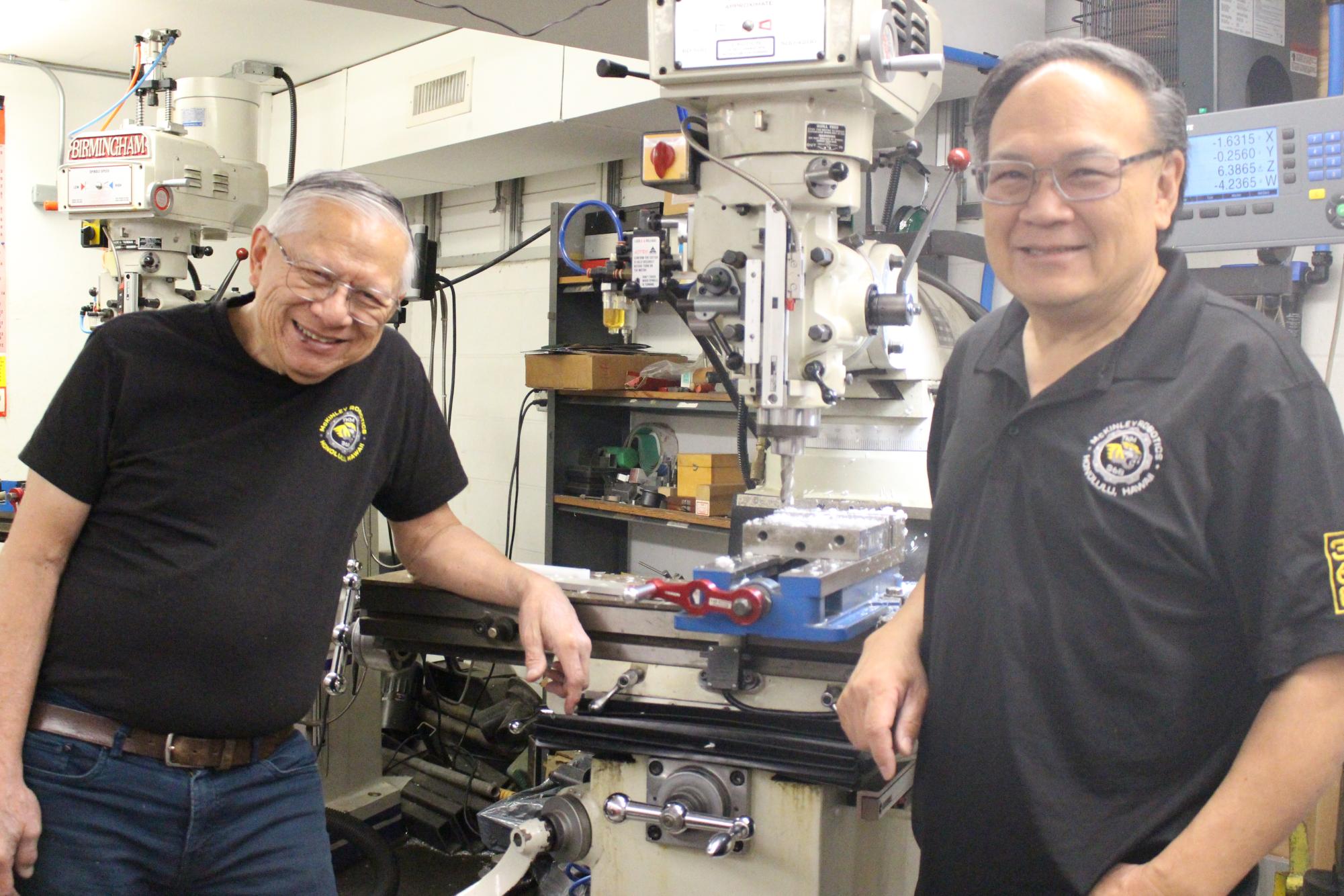
“It was an awesome experience learning from industry professionals. I definitely think a lot of these skills are transferable to real-life experiences, such as quick thinking and decision making,” Wu said.
Wu is currently enrolled in college for Bio-Engineering on the pre-medical track. Wu said all the skills she learned from the mentors would benefit her greatly now that she is studying at Stanford University, which is very tech-focused.
Students are not the only ones who have been greatly influenced by their time on the team. Ing said he believes mentors get a lot out of the experience too. Working with students has taught Ing how to talk to people, be compassionate, be patient and how to solve problems as a team.
“We all make new friends while doing this and we all figure out how to overcome challenges. And we learn a lot about ourselves too. … We don’t know how far we can go unless we’re pushed. And the competition and the students can really push you,” Ing said.
Tom said he is proud of what the students have achieved beyond their time with the robotics team. He mentioned past students becoming engineers, program managers, etc.
Beyond teaching students technical skills, Tom and Ing’s legacy is characterized by the countless students they have nurtured, inspired and built confidence in. Their guidance, encouragement and devotion to the robotics program has left a lasting mark on the school community and the community is grateful for their contributions.
“I hope they had fun when they spent time with us … I really hope that they learned something about life … and that we always wanted them to succeed,” Ing said.
Although the team is taking a break from robotics, this is certainly not the end for Team Kika Mana. Lau said the team needs to press the “reset” button from time to time to reevaluate their vision as to how they can create better opportunities for future endeavors.
“What people say is true, it takes a village to raise a child, and that has been the case for our robotics team. We are blessed to have wise village men and women to guide us with their knowledge and wisdom. Along with the support from our community, sponsors, alumni and faculty members,” Lau said.
This article has gone through the following process: pitch, interviews, drafting, peer feedback focused on content/structure, revision, peer feedback focused on language/conventions/style, self-checked for ethics and fact-checked by sources. Student editors approve the article for publication.





Mary Ann Kadooka • Apr 9, 2026 at 3:11 PM
Thanks for a beautifully written article. The dedication and commitment of Mr. Tom and Mr. Ing enriched so many lives. Everyone’s experiences made FIRST robotics a win-win situation. Kudos to Mr. Lau, also, who served as the backbone of this competition! Go, Tigers!
(Mr Lau, my former student at McKinley, has been an incredible teacher.)