

History books remember December 7, 1941, as the “Day That Will Live in Infamy,” when the Japanese Navy bombed Pearl Harbor. For Mary Oda Tamura (McKinley Alumni ℅ 1947), that Sunday morning 84 years ago began like any other—until the sounds of war reached her. Tamura was a junior high student in 1941, walking with her 18-year-old older sister to a dental appointment at the corner of Nuuanu and King Street.
“[At that time, our dentist] took patients by first come, first serve, so we wanted to get there early enough to be high on the list,” Tamura said.
Living near the end of Manoa Valley, she and her sister had to walk five miles to the nearest bus stop at the crossroads of Manoa Road, Oahu Ave., and Lowrey Ave. During the walk, Tamura noticed unusual sounds echoing across the valley.
Tamura said, “We heard so many booms, planes and emergency vehicles with sirens headed west. All we heard people saying was ‘maneuvers’.”
At the start of the Pearl Harbor attacks, many civilians and even some U.S. personnel, assumed the explosions and planes were part of scheduled military training exercises, which added to the confusion.
When Tamura and her sister reached the dentist’s office, no one appeared alarmed. It was a Sunday, so the amount of sirens seemed strange, but the waiting room remained calm. The girls signed in and sat down.
Then the shaking began.
Looking out from the second-floor window, she saw crowds of people running toward the pier. Leaving their belongings behind, the sisters ran downstairs toward the water to see what was happening.
“We were able to hear all the noises of planes, sirens, fire trucks, and ambulances all headed west,” she said.
Outside, the street was crowded, making it hard to see anything. Tamura climbed onto a pillar while her sister, who was already tall, stood beside her.
“I was facing toward Pearl Harbor, but I couldn’t see because there was so much traffic and smoke,” she said.
Then one moment made everything real.
As Tamura stood on the pillar, she heard a plane roaring overhead, getting louder as it got closer.
“I made eye contact with the pilot, and it was a good thing he did not have his gun pointed,” she said, “As soon as the plane came through the opening and I saw the red sun under the wing… oh my gosh, it was scary.”
The red sun on the planes was the symbol of the Japanese flag. For many Japanese Americans, seeing that emblem was frightening because they instantly understood that the attackers were from Japan, the country their families had come from.
After that, Tamura and her sister ran back to the dentist’s office, grabbed their belongings, and took the bus to Manoa. While walking the rest of the way home, a neighbor fortunately spotted them and gave them a ride.
The impact of the attacks on Tamura’s family was stressful. Her brother had to work late nights driving an ambulance with wounded people. He was originally a produce truck driver but was trained to drive an ambulance shortly before the war.
“My mother always used to worry about him, because he’s the only son in the family coming home late,” Tamura said.
Her mother also carried the weight of caring for eight children alone. Tamura’s father had passed away from a stroke the year before, leaving her mother to face the fear and uncertainty of the attack with no support.
“She was naturally very, very scared because we all were at school or at work and she would be home by herself,” Tamura said. “It was very terrifying days for the Issei.”
Fortunately, no one in Tamura’s family was sent to concentration camps after the attacks, although her brother was arrested for questioning and later released.
This entire ordeal happened while Tamura was still a junior high school student at Washington, and after everything her family went through during and after the attack, Tamura pushed forward with her education. She became the first one in her family to graduate from both High School and Commercial College.
However, for the rest of Tamura’s life, her memories of Pearl Harbor never left her even after she moved away from Hawaii to California with her husband and three younger daughters in 1965.
Her daughters said that she tells the story of the day of the attacks often and likes to tell it to anyone new she meets.
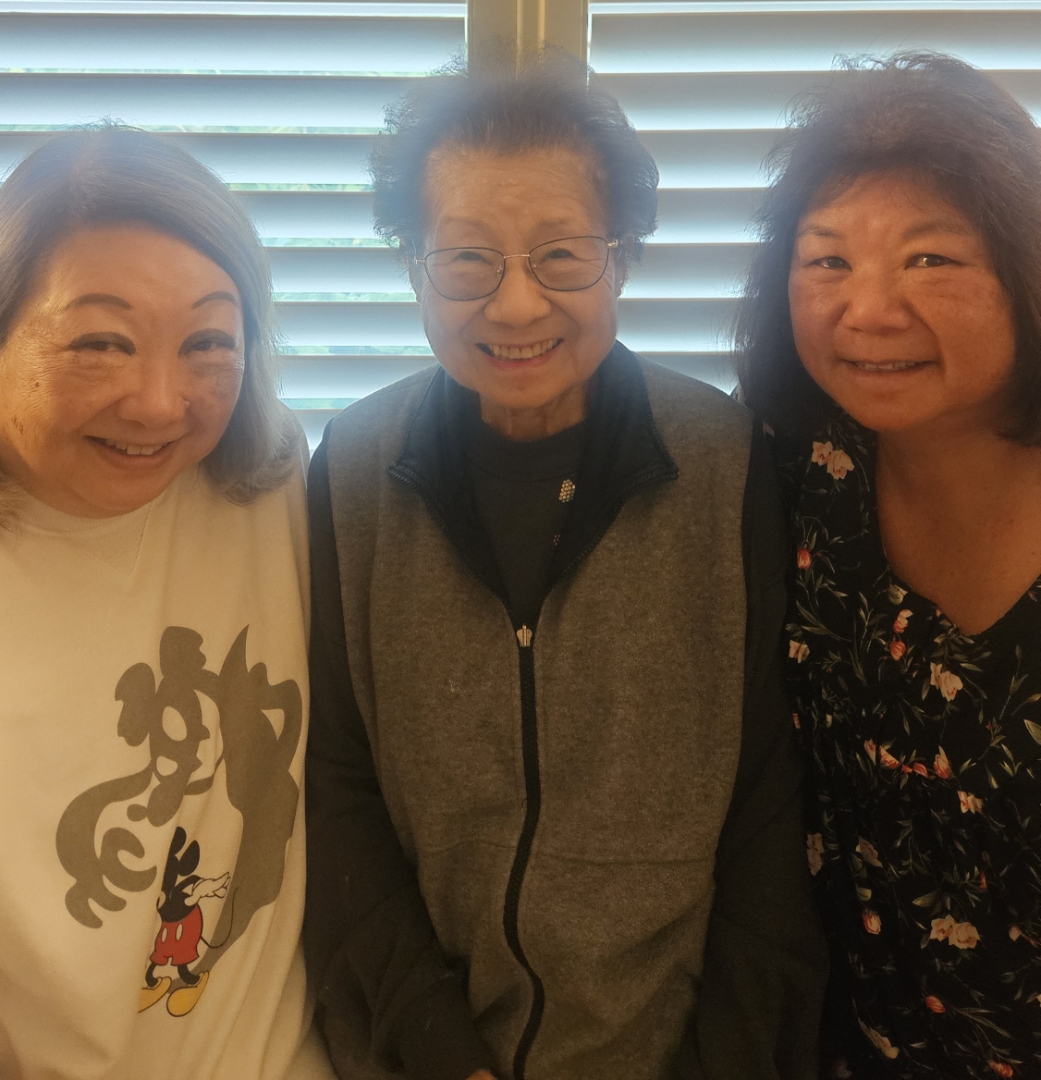
Her daughter Charlene Nation said Tamura completely avoided any movies about Pearl Harbor, even when everyone else wanted to watch them. Nation remembered how one year, when the Pearl Harbor movie came out, the whole family was excited to see it, except her mom.
Nation said, “She told us, ‘I don’t need to see any movie. I lived that movie.’”
Nation added that when she was growing up, her Japanese school sometimes showed older Pearl Harbor films, but her mom still would not watch them.
To this day, Tamura has never seen a single movie related to the attack—she saw the real thing.