
At McKinley High School, students and teachers may not always have reliable access to clean drinking water due to concerns of poor filtration in water fountains, and limited availability across cam-
pus. Throughout the school day, students depend on campus water fountains to stay hydrated. However,
many fountains have low-quality filters, and are sometimes located far from classrooms, making it difficult for students to consistently access clean drinking water. McKinley spans across 45 acres of land, requiring students and staff to walk long distances between classes, often under the sun. These conditions can lead to dehydration, making access to water even more important. Despite this need, multiple students say the current water system is not meeting expectations. Student teacher Kelsey Paulseth says she drinks about eight cups of water a day, but often runs out before the school day ends. Because of this, she brings an extra water bottle to refill her main flask. Paulseth said that she avoids relying on school fountains.
“McKinley doesn’t filter their water,” Paulseth said.
Band student Melissa Nishihara (c/o ‘28) also emphasized both the lack of access, and the need for improvement. She believes the school should not only improve filtration, but also provide a water bottle for students when needed. During long rehearsals, she says hydration becomes a challenge.
“When we have rehearsals, we don’t have a water fountain in the band room or even in the auditorium,” Nishihara said.
Additionally, she said that she often has to wait until she gets home to drink water. For student athletes like Kena Anien (c/o ‘27), access to clean water is even more critical. Due to intense physical activity, athletes are at a higher risk of dehydration throughout the day. Anien said that while some fountains are heavily used, they are not always well-maintained. He specifically mentioned fountains in the A building near the boys bathroom, E building near the girls bathroom and the sink in the cafeteria as okay to use. Despite its heavy use, he said the fountain in the gym is one of the worst on campus.
“It is constantly being used by athletes, coaches, and students, and that fountain should be the main one with good filtration,” Anien (c/o ‘29) said. “The water is milky.”
In response to these concerns, Principal Ron Okamura addressed both the condition of the water fountains and student responsibility in maintaining them. Okamura said that some of the damage to the fountains may come from student misuse.
“Why would you beat something up that’s there for you?” Okamura said.
At the same time, Okamura said that maintaining water quality is also the responsibility of school staff.
“As for the filters, the custodians should be going around checking and replacing those filters when they need to be,” Okamura said.
Water fountain filtration indicating
maintainance is required, followed by a red blinking light to show poor water quality. Photo by Poli’ahu Cootey-GarciaOkamura’s response suggests that while systems are in place, they may not always be consistently changing the filters. These concerns recognize the broader issue pertaining to water quality affecting students, teachers and staff alike. While McKinley provides basic facilities; access to reliable drinking water remains inconsistent. As students continue to navigate long, hot days on campus, the condition and availability of water resources play a bigger role in their health, and overall school experience than
many realize.
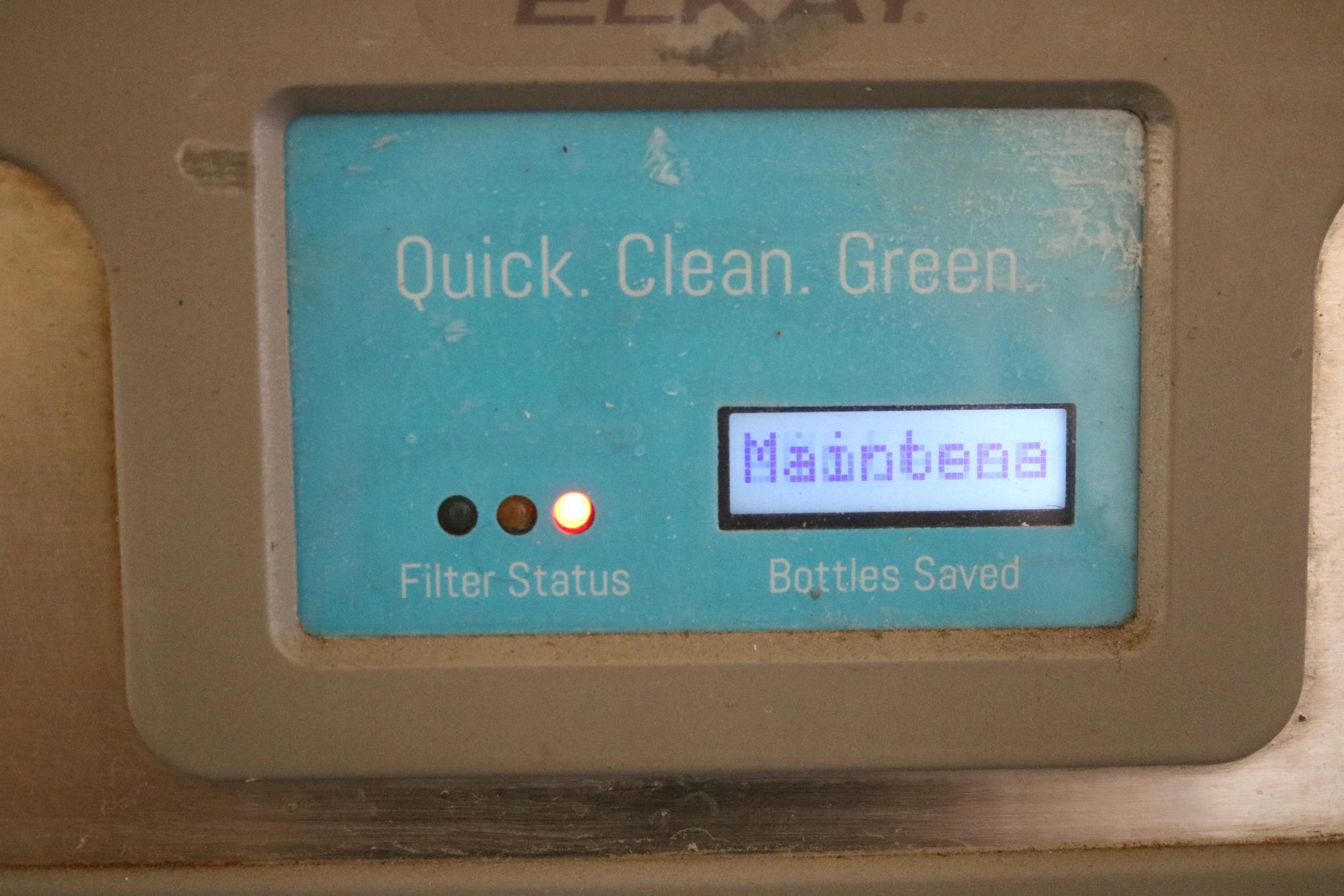
maintainance is required, followed by a red blinking light to show poor water quality. Photo by Poli’ahu Cootey-Garcia
This article has gone through the following process: pitch, interviews, drafting, peer feedback focused on content/structure, revision, peer feedback focused on language/conventions/style, self-checked for ethics and fact-checked by sources. Student editors approve the article for publication.