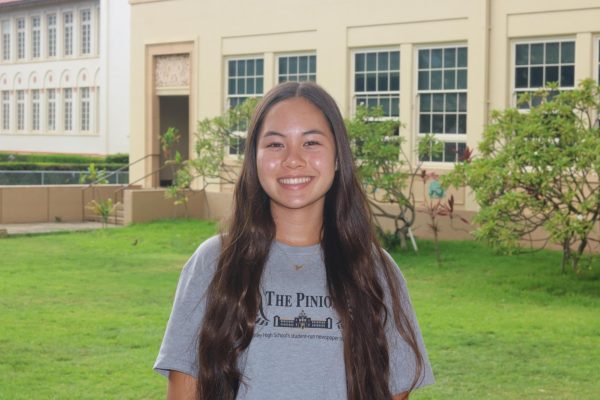

Cheska Orias
Played For Laughs: Television’s Dangerous Distortion of Anxiety
“Played For Laughs: Television’s Dangerous Distortion of Anxiety” an article written by Quyen Anderson from Bera Olinda High School, talks about how mental health disorders such anxiety disorders is often dramatized and romanticized negatively in media. They go on to talk about how mental health disorders is characterized in shows such as “Euphoria” and “Shameless” can prevent people from seeking help, due to how the topics are portrayed.
This article can help serve as a mentor text because it provides multiple links to their sources along with providing examples of different portrayals of the topic. Being able to show where one gets their information is one crucial skill of a reporter, as it shows that you have actually done your research. By being able to provide your resources on the topic it helps strengthen whatever you are writing about. Also by adding on different examples it shows the reader that the topic being written about is an issue and not an isolated incident. Not only that but the article approaches the topic with care and sensitivity which is important when writing about any article about mental health.
Dominic Niyo
Early Education Bill Gutted, Replaced With School Leadership Restrictions – Honolulu Civil Beat
This article, written by Civil Beat reporter Megan Tagami, explains how a Hawaiʻi education bill changed in a way that surprised both the public and government accountability groups. House Bill 2567 originally focused on early childhood education, but senators removed that content and replaced it with a proposal to limit the number of school superintendents in the state. The new language came from a different bill introduced by Sen. Donna Kim that had already failed earlier in the session. The attorney general warned that this switch could violate a 2021 Hawaiʻi Supreme Court ruling that bans lawmakers from replacing the contents of a bill with unrelated material late in the process.
This article is a strong mentor text for accountability reporting because it explains a complicated legislative process in a way that any reader can follow. It meets several elements of newsworthiness, including conflict, impact, and prominence, because the bill affects statewide school leadership and raises constitutional questions about how laws are made. The reporter interviews the right people, including the attorney general’s office, government accountability groups, school principals, and a political scientist. Their quotes help explain why the process matters and what the public could lose when bills change without notice. The structure is clear and chronological, with transition paragraphs that explain how the bill shifted, how much public notice was given, and why the change raised concerns. These transitions are longer than the quotes and carry the key information. The article ends by returning to the public stakes, showing that advocates want lawmakers to correct the issue before it becomes a legal challenge. It demonstrates how strong reporting can make a complex government process understandable and transparent for readers.
Laurie He
Hawaiʻi Law Enforcement Director Wants To Return To HPD
This article was written by reporter Madeleine Valera and published in Civil Beat. The article is about Mike Lambert, Director of the Department of Law Enforcement, planning to step down from his position this summer to return to the Honolulu Police Department in order to earn full retirement benefits (he needs to serve five more years).
The article can serve as a mentor text because it meets several elements of newsworthiness: proximity, prominence, human interest and timeliness. Valera went directly to the source: Lambert himself, and asked the right questions. Readers might want to know if Lambert knew the way the retirement system is set up before taking the state job and that was answered in the article. Lambert said he knew but he had hoped the issue would be fixed by the Legislature. The article then included valuable information about how that hope was dashed after the death of House Bill 2358, which led to Lambert’s decision. The quotes pulled from Rep. Jackson Sayama (who introduced the bill at Lambert’s request) and Gov. Josh Green also gives readers a clear stance on how they feel about the situation. For Sayama, the quotes tell readers he doesn’t want to see further turnover in state government and that he thinks it’s unfortunate Lambert does not want to stay for this reason. For Green, his quotes tell us he is disappointed the bill did not get a hearing, which caused it to die.
Rose Ganotisi
O’ahu Faces Impacts of Flash Floods and Landslides From Recent Storms
This is a news article written by Elle Vincioni and published to UH Manoa’s Online Newspaper site, Ka Leo O Hawaii, on April 16. The article reports on the impacts of the recent storm that devastated communities across the islands. It goes over the details of the floods, evacuations, infrastructure damage and government response. It includes official statements from Josh Green, as well as firsthand accounts from affected residents, and explains the process of requesting federal disaster aid through agencies like the Federal Emergency Management Agency.
This article serves as a strong mentor text because it demonstrates an article having clear structure, and credible sourcing. The lead clearly established the 5W’s of the storm and throughout the article, Vincioni integrates authoritative sources from the governor and updates about policies. This builds credibility and shows the larger significance of the event. At the same time, incorporating the voices from local residents who shared their experience of the aftermath of the storm brings a human voice into the story. The local residents he talked to were Yangzhi Zhao and Elinor Case Pethic. However, I think the reporter could have actually used quotes in the article to bring out the emotion and add feeling for the readers. At the end the author added updates which I think shows they care about the story to ensure they update the readers as the story and storm progresses.
Keilana Yandall
This article was written by Christian Shimabaku and published on Aloha State Daily. This article talks about the demolition of the Aloha Stadium in Halawa, O’ahu and its future plans for the new stadium they are building. The author uses figures such as former University of Hawai‘i football coach, June Jones to talk about their past experiences with the stadium and how they feel about it. New additions to the stadium include being the home of the Hawai’i Sports Hall of Fame, new seats and field.
This article can serve as a “mentor text”. Shimabaku provides context within the first paragraph of the story, which makes it easy for the reader to follow along.
He starts off by saying, “HĀLAWA — Aloha Stadium’s northwest bowl was demolished early Thursday afternoon, marking another significant step toward building a new stadium on the same grounds that’s expected to be ready in time for the 2029 college football season.”
Because he gives his audience the information needed to know the 5 Ws (when, where, who, what, why), it allows him to go more into depth such as financial details and differences in the new stadium.
This article meets proximity, human interest and timeliness. It meets these elements of newsworthiness because this article was published shortly after it happened. It meets human interest and proximity because the story is close to the audience, and many people of Hawai’i have many memories of the Aloha Stadium, so they may be interested in learning more about it.
The author also uses good quotes in his article.
One article he took from someone he interviewed is, “‘It’s a little bit of bittersweet, because I’ve sat in those stands,” Aloha Stadium interim manager Michael Yadao said. “It’s like seeing an old friend go away. On the flip side of that, it signals momentum and push towards remaining timelines. And we’re going to be ready for that 2029 football season, because things like this happen today, right?”
This is a good quote to use because it shows a sense of vulnerability, which adds emotion to the story. It makes the audience have sympathy towards this person which makes this article more engaging.
Jacky Oasay
Lt. Gov Sylvia Luke Announces Indefinite Leave of Absence, Without Pay
This article was written by Mahealani Richardson, Lynn Kawano, and HNN staff and was published on Hawaii News Now on April 23, 2026. This is about Lieutenant Governor Sylvia Luke announcing her leave of absence without pay due to being a target of a bribery investigation. Prior to this, she also stepped out of re-election. The article talks about how Governor Josh Green instructed Luke to take this leave of absence until it is completely cleared.
This serves as a good mentor text because it is a straight-forward and timely breaking news article. The quotes used were informative, but also added depth and emotion. I also liked the subheadings which made the article easier to read. I also liked how it used hyperlinks to inform other articles—-in this one, overall, the article gave a lot of information in a concise manner.
Ellie Gonzaga
https://bestofsno.com/86392/news/maryland-passes-legislation-to-restrict-cell-phones-in-schools/
This article was written by Andy Zhu, Richard Montgomery High school. This story has an impact because of the phone ban that is taking effect as of next year for Hawaii. Due to these new policies at Montgomery, phones must be turned off during passing periods and lunch time. Additionally, phones must also be powered down from the first bell until the dismissal bell. Many students have spoken up about this new rule describing the policy as “restricted” and an “unnecessary control on the use of phones” whereas some teachers back up these statements stating that the cellphone use is a distraction from students actually learning anything if they aren’t focused.